
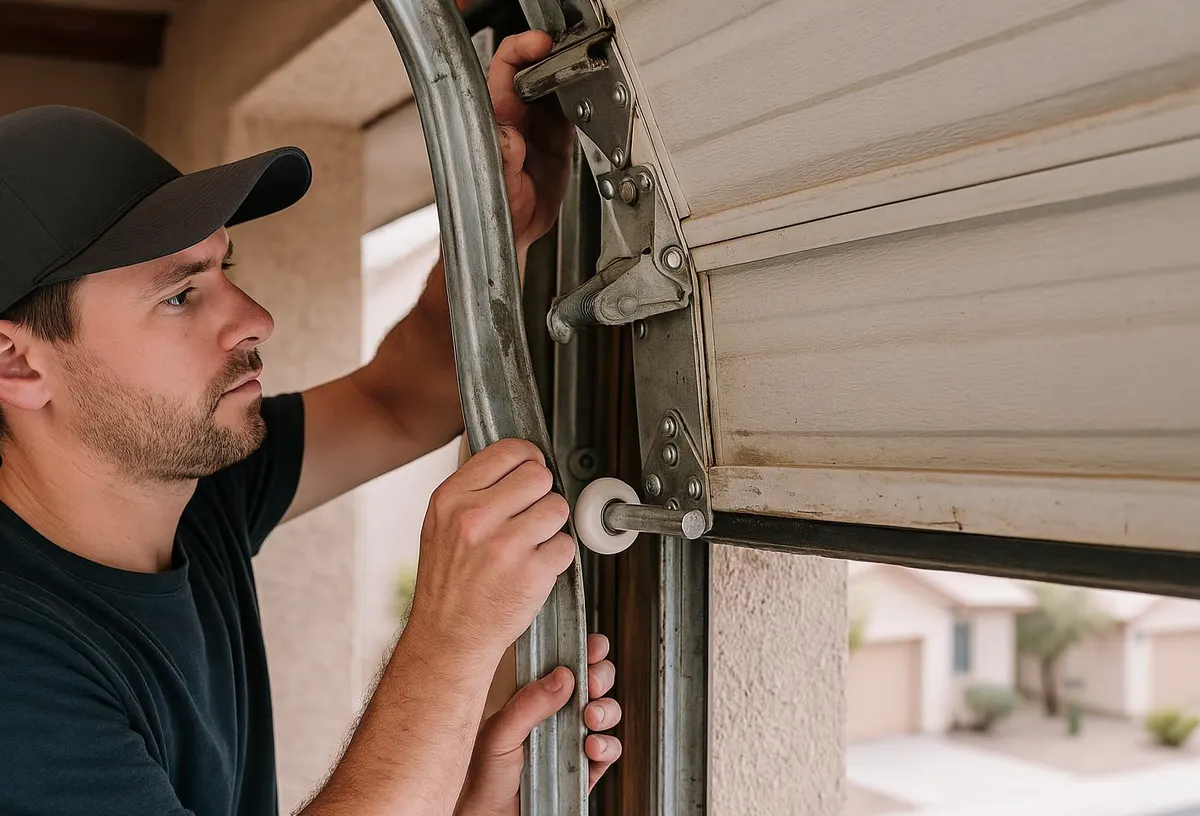
The short answer: disconnect the opener, lift the door halfway by hand, and let go. A balanced door stays put. If it drops, slams down, or jumps up on its own, the springs are no longer carrying their share of the weight — and your opener has been quietly compensating for it, probably for months.
What "Balanced" Actually Means
A garage door is a 150-to-400-pound slab held up almost entirely by spring tension, not by the opener. The motor's job is just to start and guide the movement. When springs are properly calibrated, the door should float at any height with no help. When they weaken — from age, humidity swings, or corrosion — the opener starts doing work it was never designed to do.
Why Tamarac Doors Drift Out of Balance Faster
Humid air and the seasonal downpours we get from hurricane season put two forces on a garage door system: moisture swelling into wood or composite panels, which adds weight, and rust creeping into spring coils and roller shafts, especially in homes closer to the coastal salt air. Both changes shift the weight-to-spring-tension ratio the door was originally set up for, and it happens gradually enough that most homeowners don't notice until the opener starts struggling.
Tools You'll Need
- Work gloves
- A sturdy stepladder
- A flashlight
- A notepad or phone to jot down what you observe at each height
You don't need a torque wrench, winding bars, or any spring tools for this test — those are technician equipment, and for good reason, which we'll get to.
The Balance Test, Step by Step
- Close the door completely. You want to start from a known, fully-down position.
- Pull the emergency release cord (the red handle hanging from the opener rail) to disconnect the door from the motor. This isolates the springs so you're testing them, not the opener.
- Lift the door by hand to about waist height. Go slow and keep both hands on the bottom panel or a handle, not under the edge.
- Let go and watch. A balanced door stays exactly where you left it. A door with weak springs will sink toward the floor; a door with over-tightened springs will jump upward.
- Repeat the test at roughly a third and two-thirds open. Some doors are balanced in the middle but not near the top or bottom — that unevenness is itself a symptom worth noting.
- Look at the springs while the door is open. Check for visible rust, gaps between coils, or one spring that looks stretched compared to the other. Don't touch or adjust them.
- Reconnect the opener by pulling the release cord again (or following the reconnect instructions on your opener) and run the door through one full cycle to confirm it reattaches properly.
What an Unbalanced Door Is Doing to Your Opener
Garage door openers are built to nudge a balanced door, not lift dead weight. When springs lose tension, the chain or belt drive has to pull much harder on every cycle. Over time that shows up as:
- A straining motor sound — a labored hum instead of a smooth run, especially on the way up.
- Gear and sprocket wear inside the opener unit, which eventually leads to stripped plastic gears, a common opener failure.
- Force settings maxed out. Many homeowners respond to a struggling door by cranking up the opener's force setting, which masks the spring problem while increasing the risk of the door not reversing properly if it meets an obstruction.
- Premature capacitor or circuit board failure on the motor from repeated overcurrent draw.
- Belt or chain stretching faster than normal, since it's under constant extra load.
In short, a $150-to-$400 spring problem, left alone, turns into an $200-to-$500 opener replacement — a trade a lot of homeowners make without realizing the two are connected.
Homeowner Territory vs. Technician Territory
The lift-and-watch test above is entirely safe to do yourself, and so is the visual rust check. What's not DIY territory: adjusting or replacing the springs themselves. Torsion springs in particular are wound under extreme tension and store enough energy to cause serious injury if mishandled — this is a job for winding bars, a technician's training, and the right calibration for your door's weight and your area's wind-load requirements, which matter here given hurricane-season wind rules. If your test showed a door that drops, jumps, or behaves differently at different heights, that's your signal to stop testing and start calling.
When to Call Precision Garage Door of Tamarac
If your door failed the balance test, or the opener sounds like it's working harder than it used to, call us before the motor burns out. Our technicians handle Garage Door Spring Repair to restore correct tension and re-balance the door safely, and we offer Garage Door Maintenance & Tune-Up service to catch rust, wear, and drift before they turn into a dead opener or a door that won't open at all during a storm. We serve homeowners throughout Tamarac, Coral Springs, Margate, North Lauderdale, Lauderhill, Sunrise, Coconut Creek, and Plantation.
If you're searching for a local garage door service in Tamarac, Florida, or a garage door technician near you in the 33321 area, give Precision Garage Door of Tamarac a call today to get your door balanced and your opener protected before hurricane season puts more strain on it.